Synchronizing Offers with the Pitch: UK Bookmakers' Free Bet Expiry Strategies Amid Football Schedules
Petra Schmitz · Aug 7, 2026
Synchronizing Offers with the Pitch: UK Bookmakers' Free Bet Expiry Strategies Amid Football Schedules
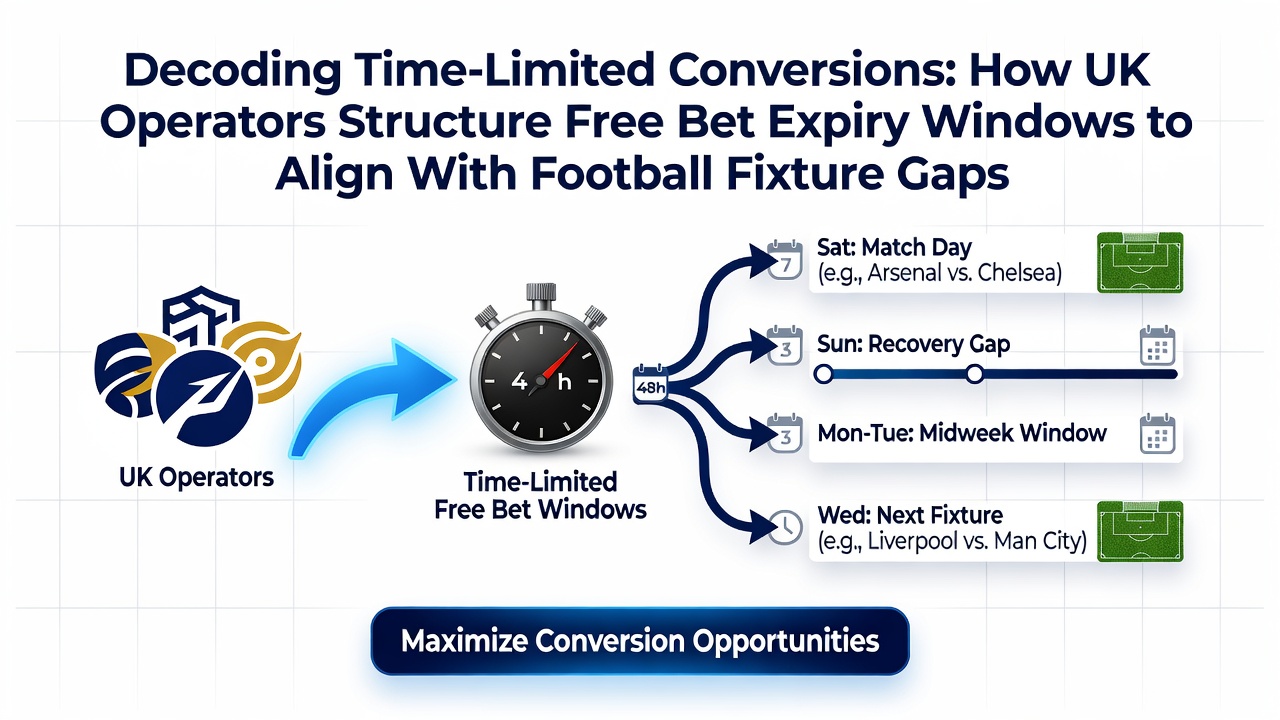
UK operators build free bet expiry windows around the natural rhythms of domestic and European football calendars, and they do so by mapping each promotion's validity period directly onto gaps between matches. Data from multiple seasons shows that most free bet offers last between five and fourteen days, a range that covers the typical interval from one Premier League round to the next while also accounting for cup replays and international breaks. Observers note that these windows rarely extend beyond the next available fixture because operators aim to convert the bonus into settled bets before the following weekend's slate begins.
Fixture Gaps as the Core Reference Point
Bookmakers receive advance fixture lists from the Football Association and European governing bodies several months ahead of each campaign, and they feed those dates into internal calendars that flag quiet periods such as midweek international windows or the brief lull after the League Cup final. One major operator adjusted its standard seven-day expiry in August 2026 so that free bets issued after the opening weekend remained valid through the first international break, thereby capturing bets on both club and national team matches without extending the offer into the subsequent domestic round. The approach keeps redemption rates high because punters see a clear deadline tied to real matches rather than an arbitrary calendar date.
Technical Structures Behind the Windows
Expiry rules appear in the terms attached to each promotion and usually specify that any free bet must be placed before 23:59 on the final day, after which unused credits vanish from the account. Operators run automated checks that cross-reference the expiry timestamp against the kick-off times listed in their fixture database, and they trigger reminder notifications forty-eight hours before the cut-off. When a midweek cup tie creates an extra gap, some platforms automatically extend the window by forty-eight hours, a change that appears in the account dashboard as a revised expiry notice. This flexibility prevents the offer from lapsing during unexpected schedule shifts such as postponed matches caused by weather.
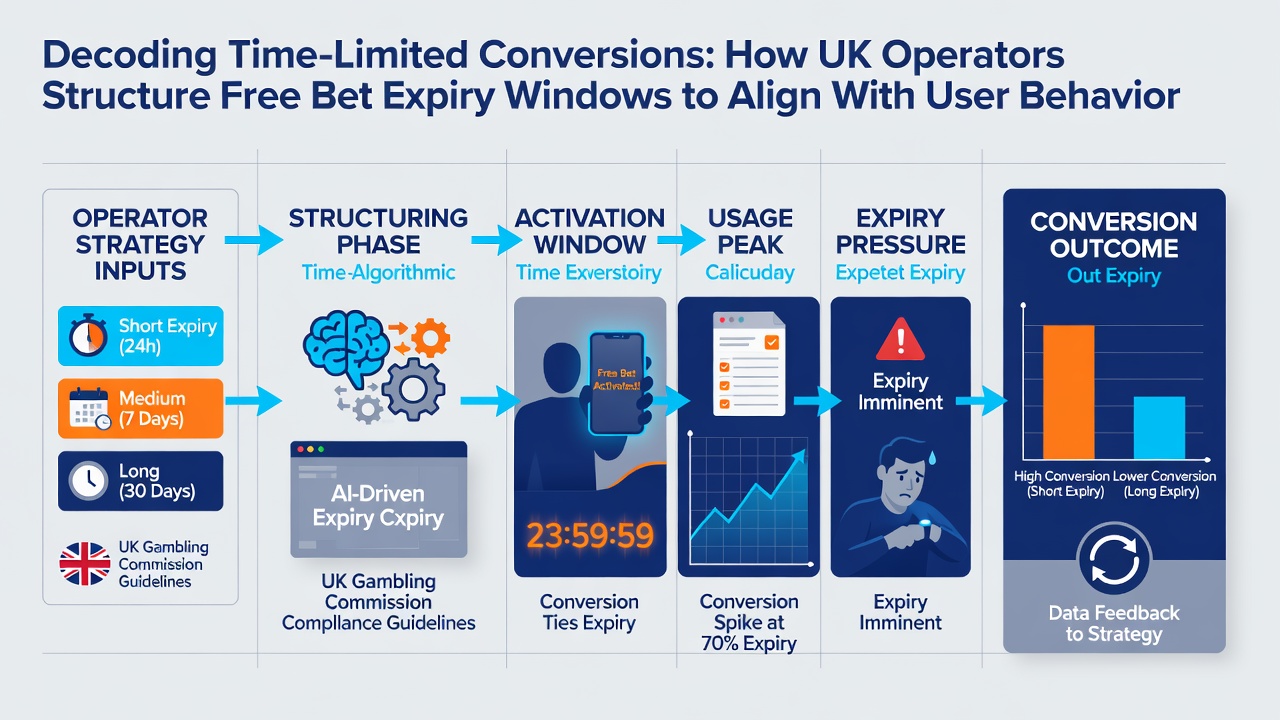
According to research published by the European Gaming and Betting Association, operators that tie expiry dates to fixture gaps record higher conversion rates than those using fixed calendar periods. The same study found that average redemption occurs between day four and day six of a seven-day window, which corresponds to the typical gap between a Saturday match and the following weekend's fixtures.
Regional Variations Across the UK Market
Operators licensed in Great Britain often publish separate expiry rules for Scottish and Welsh customers because their domestic leagues follow slightly different calendars. A free bet issued after a Scottish Premiership match might carry a five-day window to align with the next midweek European tie, whereas the same operator applies a ten-day window for English Premier League customers during an international break. These differences reflect the distinct fixture densities reported by each league's scheduling body.
Industry reports from the American Gaming Association highlight parallel practices in other regulated markets, noting that alignment between bonus windows and local sports calendars improves player engagement across multiple jurisdictions. UK operators have adopted similar data-driven methods, adjusting expiry lengths after each season based on actual redemption patterns collected during the previous campaign.
Impact on Player Behaviour and Settlement Timing
Customers who receive a free bet shortly after a weekend round often place it on teh next available midweek fixture or carry it forward to the following Saturday. When the expiry falls between two high-profile matches, operators observe a spike in settled bets on lower-profile leagues because punters seek any available fixture before the deadline. This behaviour appears consistently in aggregated transaction data, and it explains why some operators add a small number of additional days during the winter schedule when weather-related postponements become more common.
Those who track betting volumes note that conversion peaks occur on the final day of each window, particularly when the deadline coincides with a major European night. Operators therefore schedule reminder messages to land on the morning of that final day, increasing the chance that the free bet converts into a placed wager before the system removes the credit.
Conclusion
UK operators continue to refine expiry structures by cross-referencing fixture databases with historical redemption statistics, and the result is a system in which free bet windows expand or contract in direct response to the football calendar. As schedules evolve with new competition formats, these alignment techniques remain the primary mechanism for matching promotional deadlines to actual match availability.